

Keep security in sync with development
Polaris combines Black Duck’s market-leading SAST, SCA, and DAST engines with IaC analysis and secrets detection into a single, developer-first SaaS platform.
Build security into dev workflows from the start
Automatically discover new projects and repos. Run rapid scans on pull requests and full scans on merges. Post results as PR comments, surface findings in IDEs and SCMs, and automatically push issues to trackers.

Onboard automatically
Onboard thousands of apps effortlessly. Polaris can find changes in your SCMs (GitHub, GitLab, Bitbucket, Azure DevOps) and automatically registers new repos and branches while keeping all data current and synced.

Scan based on SCM events
Reduce downstream risk by running rapid scans on pull requests. Results post as PR comments for fast, in‑SCM feedback. Full scans can be triggered on merges, with results flowing right into Jira or ADO instances.

Apply policy-driven gates
Enforce security standards across the SDLC by breaking builds, blocking pull requests, sending notifications when a policy is in violation—and staying invisible when it’s not.

“Black Duck’s ability to align to security-defined policies while functioning on automated pipeline triggers—things like code commits, pull requests, and builds—means that scans can run as early as possible while accommodating project nuances, contextual changes, and risk tolerance”
Cut through the noise and fix what matters
Result: Teams spend time on real threats, not false positives or low-priority defects. This improves fix rates and reduces fatigue.

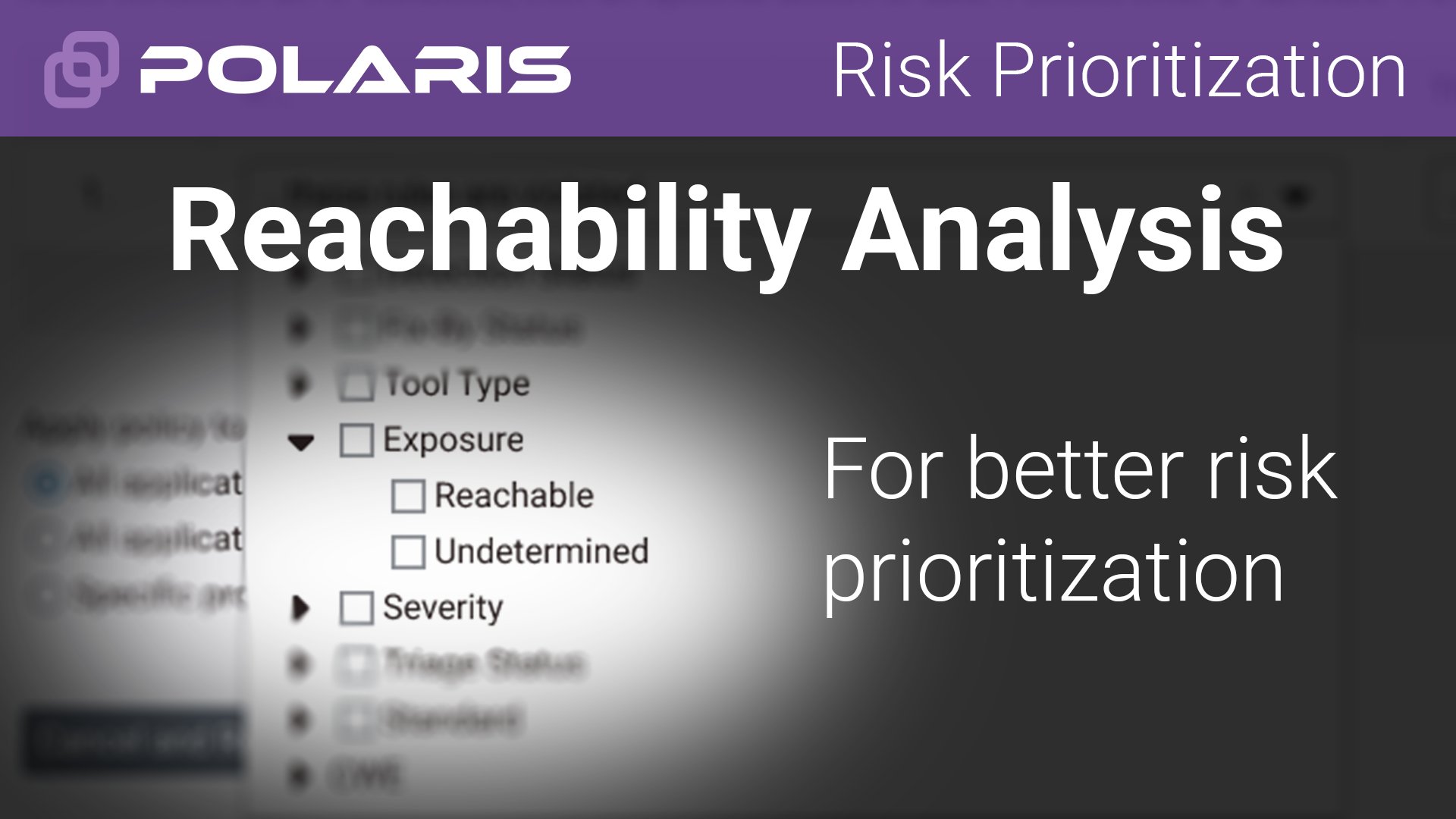
Get a single prioritized view of issues across all scan types. Polaris delivers an integrated risk score that includes environmental, business, and application risk profiles.

Tailor policies to your risk profile
Define policies—like no OWASP Top 10 critical risks in production, or GPL code must be approved—and prove you adhered to them. Polaris ensures compliance through policy and reporting.
Control policy from one place
Enforce policy automatically
Make policy adherence measurable
Fix at AI speed with Black Duck Assist
Black Duck Assist™ gives developers real-time issue summaries, code analysis, and fix suggestions in the IDE, so they can fix security defects before they commit.
Get trusted and accurate results with industry-leading engines
Get depth when you need it. Black Duck’s market-leading SAST, SCA, and DAST to give you unified, accurate results—whether issues are found in proprietary code, an open source component, or a cloud-based web app.

Fix security defects in code and IaC

Secure your software supply chain

Verify the security of APIs and web apps
Secure your software no matter how it’s built
Polaris supports the most popular languages, frameworks, and package managers, plus IaC, API, and secrets scanning.


Know your risk, prove your impact
Polaris gives security leaders a real-time, unified view of application risk—and the tools to prove their program’s value.
Customized reports the views that your team cares about. One dashboard covers all AST results—no stitching together spreadsheets from different tools.


A Magic Quadrant™ Leader for the Eighth Consecutive Time
2025 Gartner® Magic Quadrant™ for Application Security Testing
Black Duck placed highest for Ability to Execute.

Powered by ContextAI: The model for building secure software
Built on 20+ years of security expertise, ContextAI™ powers our platform with human-validated security intelligence that enables security and development teams and AI agents to build secure, high-quality software faster.
Related content
Black Duck Polaris Platform
True Scale AppSec in an AI-Driven World
2026 OSSRA Report
FAQ
The Black Duck Polaris Platform is a comprehensive, cloud-native, SaaS application security testing solution designed to unify and automate application security throughout the software development life cycle. It integrates the industry’s most powerful security analysis engines—including SAST with Polaris fAST Static, SCA with Polaris fAST SCA, and DAST with Polaris fAST Dynamic—into a single, fully integrated platform.
Polaris empowers development, DevOps, and security teams by providing fast feedback, seamless CI/CD integration, and comprehensive vulnerability detection with governance controls. Built for scalability and flexibility, Polaris eliminates the traditional overhead of on-premises tools, allowing you to onboard and scan code within minutes from popular repositories like GitHub and GitLab. By shifting security left and consolidating multiple testing types, Polaris transforms application security into an automated, continuous process, ensuring that you maintain comprehensive visibility and control over your application security risks across diverse technology stacks.